









Anjali Arora, Nisha Guraga, Karmita Kaur, Gungun Gupta and the Kulhad Pizza couple have all been associated with separate online controversies involving alleged private videos. In several cases, the people involved disputed the material or questioned its authenticity, highlighting the dangers of unverified viral content.
Social media has transformed ordinary creators into household names, but online fame can also bring intense scrutiny.
Influencers and digital creators are frequently targeted by rumours, manipulated content and alleged private recordings. Once such claims begin circulating, they can spread rapidly across Instagram, YouTube, Facebook, X and other platforms.
Several Indian influencers have previously found themselves at the centre of such controversies. Here is a look at five widely discussed cases and what has been reported about them.
See more of our coverage in your search results.
Add Hunterfly on Google1. Nisha Guraga
Nisha Guraga is a prominent Indian social-media personality who became widely known through short-form video content.
She developed a substantial following on TikTok before the platform was banned in India and subsequently continued building her audience on Instagram and other social networks.
At one point, an alleged private video was circulated online and attributed to Nisha.
The material generated considerable discussion, but Nisha disputed the authenticity of the video and described it as fake.
The controversy demonstrated how easily a creator’s name can become attached to material circulating online without reliable verification.
See more of our coverage in your search results.
Add Hunterfly on Google
2. Karmita Kaur
Social-media creator Karmita Kaur has also been linked to an online controversy involving an alleged private video.
Reports about the incident generated considerable attention on social media, with users debating whether the material was genuine.
Karmita subsequently became the target of online trolling as the claims spread.
See more of our coverage in your search results.
Add Hunterfly on GoogleHowever, the authenticity of alleged private material should not be assumed simply because a video has attracted a large number of views or reposts.
The controversy also illustrates how creators can face reputational damage even when the underlying claim remains unverified.
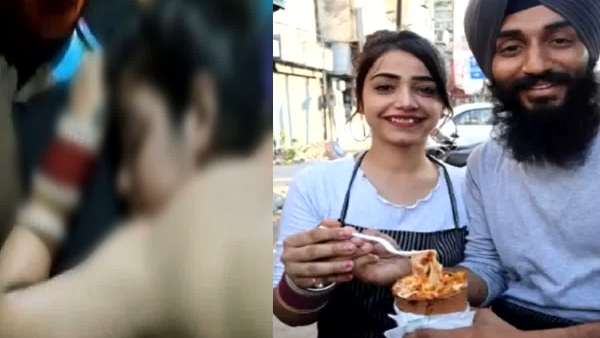
3. The Kulhad Pizza Couple
The controversy involving the Kulhad Pizza couple, Sahaj Arora and Gurpreet Kaur, became one of the most widely discussed social-media incidents of its kind.
The couple, who became known for their food business in Jalandhar, Punjab, faced widespread online attention after an alleged private video involving them circulated.
The couple subsequently addressed the controversy publicly and claimed that the circulating material had been created or manipulated using artificial intelligence.
Their response brought additional attention to the growing problem of digitally manipulated content.
The incident demonstrated that advances in artificial intelligence can make it increasingly difficult for social-media users to distinguish genuine recordings from manipulated material.
4. Gungun Gupta
Gungun Gupta, a popular Indian social-media influencer, also faced an online controversy involving an alleged private video.
The material spread rapidly across social-media platforms and generated substantial discussion among her followers.
As the controversy developed, Gungun became the subject of intense online scrutiny.
The case again highlighted the speed at which alleged private content can become viral, particularly when large creator accounts and reposting networks amplify the original claim.
5. Anjali Arora
Anjali Arora became one of India’s best-known digital creators after gaining popularity through social media and her appearance on Kangana Ranaut’s reality show Lock Upp.
She was later drawn into a controversy involving an alleged private video that was circulated online using her name.
The incident resulted in significant trolling and online speculation.
Anjali publicly addressed the claims and questioned the use of her name and photographs in connection with the circulating material.
Her response made clear that an allegation appearing repeatedly on social media does not necessarily mean that the person named in the claim is actually involved.

What these controversies have in common
Although the five cases are different, they share a common pattern.
A claim involving a creator begins circulating online, social-media accounts repost it, and increasingly sensational headlines attract additional attention.
Once a story becomes viral, users can mistakenly interpret its popularity as proof of authenticity.
It is important to remember that views, shares and search rankings are not evidence.
A video must be independently authenticated before claims about the identity of someone appearing in it can be treated as established fact.
The growing problem of manipulated content
The emergence of AI-generated and digitally manipulated media has made these controversies even more complicated.
Images and videos can now be altered or fabricated with increasingly sophisticated tools. This means that audiences should be particularly careful when a sensational claim is based primarily on an anonymous social-media post.
The Kulhad Pizza controversy brought this issue into particularly sharp focus after the couple disputed the authenticity of the material associated with them.
Why responsible reporting matters
Stories involving alleged private videos can generate enormous traffic, but reporting them purely through sensational headlines can amplify unverified claims.
A more useful approach is to focus on:
- What was actually reported?
- Did the person involved respond?
- Has the material been independently authenticated?
- Are there official investigations or legal proceedings?
- Is the claim being repeated from a single unverified source?
This approach gives readers context rather than simply directing them toward viral content.
Social-media fame comes with new challenges
The experiences of Anjali Arora, Nisha Guraga, Karmita Kaur, Gungun Gupta and the Kulhad Pizza couple show how quickly online fame can turn into unwanted scrutiny.
For influencers whose careers depend heavily on social platforms, misinformation can spread just as quickly as their legitimate content.
The responsibility therefore lies not only with publishers but also with audiences to verify information before sharing it.