



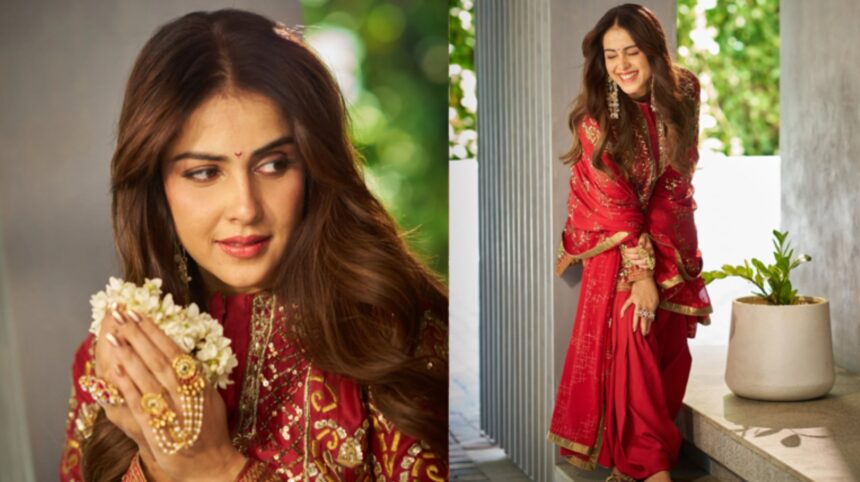
Genelia Deshmukh makes a strong case for heritage Indian craftsmanship with her latest festive look, pairing a short red embroidered kurta with a Patiala-inspired silhouette and centuries-old embellishment techniques including zari, zardozi and marodi.
Festive fashion does not always need to reinvent tradition. Sometimes, the most striking looks come from taking techniques that have existed for generations and presenting them through a contemporary lens.
Genelia Deshmukh’s latest festive ensemble does exactly that.
For Janmashtami, the actor opted for a richly embroidered red outfit from Delhi-based designer Reynu Taandon’s Sindoori collection. The ensemble combines traditional Indian craftsmanship with a more compact, contemporary silhouette, resulting in a look that feels rooted in heritage while remaining distinctly modern.
See more of our coverage in your search results.
Add Hunterfly on GoogleGenelia Deshmukh chooses a richly embroidered red ensemble
The centrepiece of Genelia’s outfit is a short red kurta featuring full sleeves, patterned neckline detailing and elaborate embroidery across the front.
Heart-inspired motifs add another layer of visual interest to the design, giving the otherwise traditional silhouette a softer and more distinctive character.
But it is the craftsmanship that truly defines the outfit.
The kurta incorporates zari, zardozi and marodi embroidery, three techniques that are closely associated with the decorative traditions of Indian fashion.
Rather than treating the embellishment as an afterthought, the design makes the craftsmanship the focal point of the ensemble.
See more of our coverage in your search results.
Add Hunterfly on GoogleZari, zardozi and marodi take centre stage
The appeal of Genelia’s look lies partly in the contrast between its familiar silhouette and intricate surface work.
Zari involves decorative threadwork using metallic-looking threads and has long been used to add a luminous quality to Indian textiles.
Zardozi is a rich form of metal embroidery traditionally associated with elaborate garments and royal Indian aesthetics. Its raised, ornate finish can give festive clothing a distinctly luxurious appearance.
See more of our coverage in your search results.
Add Hunterfly on GoogleMarodi is another traditional embroidery technique known for detailed handwork and decorative patterns.
Together, these techniques give the red kurta a handcrafted, heirloom-like quality.
The result is a reminder that traditional Indian embroidery can work just as effectively in contemporary festive wardrobes as it does in classic bridalwear.
The Sindoori collection gives the look its festive identity
Genelia’s ensemble comes from Reynu Taandon’s Sindoori collection.
The name references sindoor, the ceremonial vermilion traditionally associated with Indian cultural and religious practices.
That connection is reflected in the outfit’s dominant red colour, which gives the ensemble an immediate festive character.
However, the styling prevents the look from becoming overly conventional.
Instead of choosing a long, heavily layered ethnic outfit, Genelia wears a shorter kurta with a Patiala-inspired lower silhouette. The combination makes the ensemble feel lighter and more contemporary while retaining its Indian identity.
A modern interpretation of the Patiala silhouette
The Patiala salwar has a distinctive place in Indian fashion, recognised for its voluminous pleats and relaxed construction.
Genelia’s version takes inspiration from that traditional form but presents it through a more streamlined festive ensemble.
The shorter kurta creates a sharper proportion, while the traditional lower silhouette retains the unmistakable character of Indian occasionwear.
This balance between old and new is what makes the outfit particularly relevant for modern festive dressing.
Statement jewellery completes the outfit
Genelia kept the focus on the embroidered ensemble but did not shy away from statement accessories.
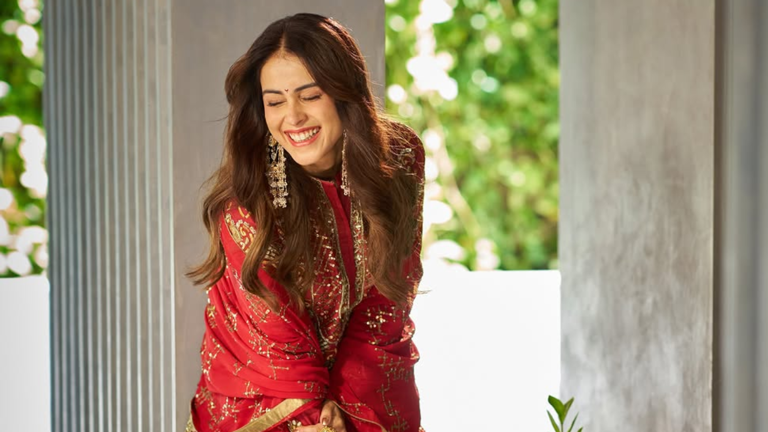
She paired the red outfit with large shoulder-grazing danglers from Amama’s festive jewellery collection, adding a dramatic touch around the face.
Her hand accessories included multi-finger rings featuring statement faux-polki and enamel detailing from Mortantra.
The jewellery works with the embroidery rather than competing against it, reinforcing the regal mood of the outfit.
For footwear, Genelia chose black juttis from Juliet Rose.
The traditional footwear adds another unmistakably Indian element to the styling while providing a visual contrast against the red ensemble.
Beauty look keeps the focus on the outfit
Genelia’s beauty styling follows the same understated-but-polished approach.
Her makeup features clean-looking skin and a fresh complexion, allowing the elaborate embroidery and jewellery to remain the primary focus.
A crescent-shaped bindi adds a traditional finishing touch.
Her voluminous hairstyle gives the overall look additional presence, balancing the statement earrings and creating a polished festive finish.
Genelia Deshmukh proves heritage fashion can evolve
What makes Genelia’s festive look particularly interesting is that it does not treat traditional Indian fashion as something that needs to be preserved unchanged.
Instead, the ensemble demonstrates how heritage techniques can be adapted for contemporary wardrobes.
The zari, zardozi and marodi work provides the richness associated with Indian ceremonial clothing, while the shorter kurta, Patiala-inspired styling and carefully chosen accessories give the outfit a modern personality.
It is a useful reminder that Indian fashion has always evolved.
Traditional craftsmanship does not lose its relevance simply because the silhouettes surrounding it change. In fact, presenting heritage techniques in new proportions and combinations can introduce them to an entirely new generation of fashion enthusiasts.