





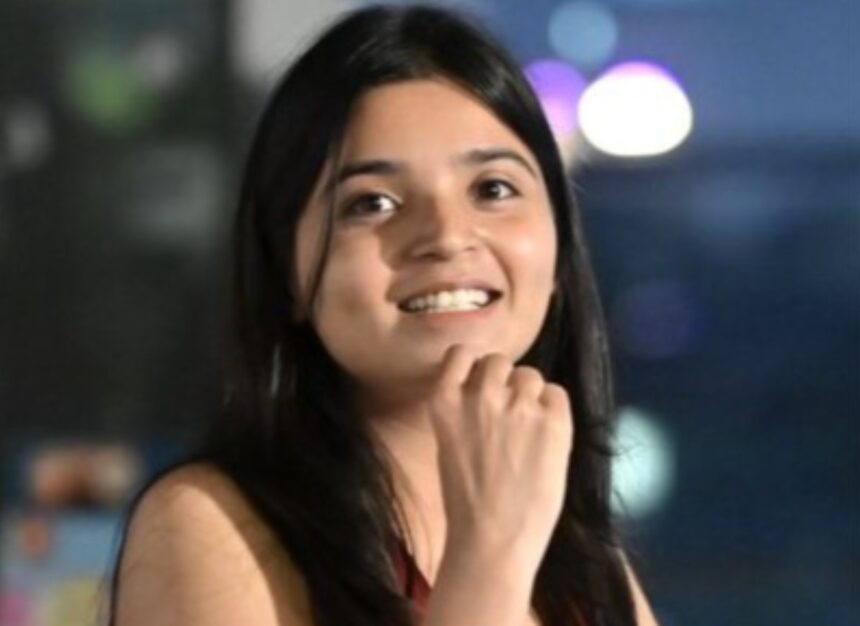
Bengaluru entrepreneur Simridhi Makhija has sparked a conversation about money and mental peace after saying that financial security can significantly reduce everyday stress.
For many people, financial uncertainty is closely tied to worries about employment, family responsibilities, medical emergencies and unexpected expenses. Bengaluru-based entrepreneur Simridhi Makhija has argued that building a financial cushion can therefore provide a sense of security that other stress-management strategies cannot easily replace.
In an Instagram video, Makhija said that having a steady income and substantial savings can make people feel more confident about dealing with whatever comes next.
“Nothing calms down your nervous system more than having consistent flow of money,” she said, according to the video.
See more of our coverage in your search results.
Add Hunterfly on GoogleHer comments have prompted discussion online about the relationship between financial stability and emotional wellbeing.
Makhija says ₹20–30 lakh in savings can provide security
Makhija, founder of The Speak Fest, said she believes the value of money is not primarily about being able to spend more on restaurants, shopping or nightlife.
Instead, she focused on the safety net created by having enough money available when circumstances suddenly change.
She specifically referred to having ₹20 lakh to ₹30 lakh saved in a bank account.
Her argument was that such a financial cushion could provide greater confidence if someone lost their job, needed to support their parents or faced a healthcare emergency.
See more of our coverage in your search results.
Add Hunterfly on Google“If you have 20 to 30 lakhs saved in your bank account, you do not have to worry about what comes next,” she said.
She added that even if a person loses their job or faces an unexpected family or medical expense, savings can provide time and flexibility while they work out their next step.
“Get to the root cause”
Makhija acknowledged that activities such as therapy, reading and other hobbies can be useful for managing stress.
See more of our coverage in your search results.
Add Hunterfly on GoogleHowever, she argued that these approaches may not address the underlying source of anxiety when financial insecurity is the problem.
“So therapy is fine, reading books is fine, trying to calm down your nervous system is fine, but unless you actually go to the root of why your nervous system is actually acting up all the time, you are not going to be better,” she said.
According to Makhija, financial independence can create a different kind of confidence because people know they have resources available when circumstances become difficult.
She described savings as a personal cushion that can make it easier to navigate uncertainty.
What does “calming the nervous system” actually mean?
The phrase “calm your nervous system” has become common in social-media wellness discussions, although it is not a precise medical diagnosis.
The nervous system is the body’s communication and control network. It includes the brain, spinal cord and peripheral nerves, which receive and process information and coordinate responses throughout the body.
Stress can activate physiological responses associated with the body’s threat-response systems. People may therefore use expressions such as “my nervous system is dysregulated” in everyday wellness conversations to describe feeling persistently stressed, overwhelmed or on edge.
That does not mean that having a particular amount of money automatically “regulates” the nervous system.
Financial security can, however, remove or reduce some real-world stressors. Research on financial wellbeing has consistently examined links between financial strain, psychological stress and overall wellbeing.
Makhija’s ₹20–30 lakh figure should therefore be understood as her personal financial benchmark, rather than a medically established amount required to achieve mental peace.
Why money can affect stress
Unexpected expenses can create significant pressure when a person has little or no financial reserve.
A sudden job loss, medical bill or family emergency can become much more difficult to manage without savings. Having an emergency fund can provide additional time to respond to such situations without immediately relying on high-interest borrowing or other sources of debt.
But financial wellbeing is not determined by a single savings figure.
The amount a person needs depends on factors including:
- Monthly household expenses
- Job stability
- Existing debt
- Number of dependants
- Health and insurance coverage
- Income level
- Housing costs
- Other financial obligations
- Access to family or other support
For someone with high monthly expenses, ₹20 lakh may provide a shorter safety net than it would for someone with substantially lower expenses.
Makhija speaks about Bengaluru founders
Makhija also connected her argument to what she said she had observed among entrepreneurs in Bengaluru.
She claimed that founders experiencing inconsistent cash flow often face difficulties beyond their businesses, while entrepreneurs with more stable finances appear more comfortable in other areas of their lives.
“I have seen here in Bangalore as to how those founders who do not have consistent cash flow struggle with everything in their life in every sphere, versus those founders who have made it, and now they are happy in every other sphere of their life,” she said.
She described this as something she had witnessed personally and said she would continue to make the argument despite criticism.
Money can provide security, but it is not a universal stress cure
Makhija’s comments highlight an important distinction between financial security and wealth for consumption.
Having sufficient savings can provide practical protection against emergencies. It can also reduce the fear associated with losing an income source or suddenly needing to pay a large expense.
At the same time, money alone does not guarantee good mental health or eliminate every source of stress.
Relationship difficulties, grief, workplace pressure, health problems and other circumstances can affect wellbeing regardless of someone’s bank balance.
Likewise, the amount of savings that provides meaningful security will differ from one person to another.
The bigger conversation around financial peace
The discussion sparked by Makhija’s video reflects a broader shift in how people talk about money.
Financial planning is often presented as a way to build wealth, but an emergency fund can serve another purpose: buying time and reducing financial uncertainty.
For someone living from one salary to the next, an unexpected expense can immediately become a crisis. A financial reserve can create breathing room and allow a person to make decisions without being forced into an immediate solution.
That may be the central point behind Makhija’s argument.
Her ₹20–30 lakh figure is personal rather than universal, but her broader message is that financial resilience can contribute to a greater sense of security.
Ultimately, financial peace is not simply about reaching a particular number in a bank account. It is about having enough resources, appropriate planning and manageable obligations to withstand life’s unexpected turns.
Hunterfly has presented Makhija’s comments as her personal views and has not treated the ₹20–30 lakh figure as financial or medical advice.