








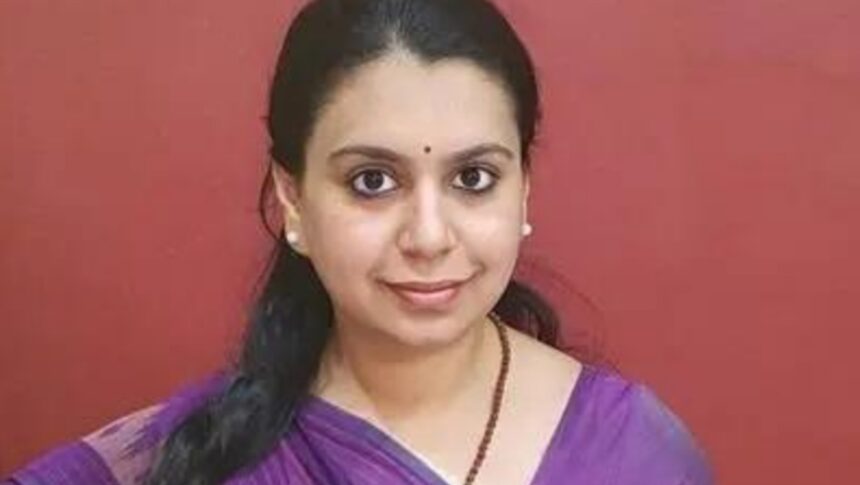
IAS officer Divya Mittal, a 2013-batch officer of the Uttar Pradesh cadre, has announced her resignation after 13 years in public service. Her decision brings to a close a journey that began with engineering at IIT Delhi, took her to a corporate career in London, and eventually led her back to India to pursue the Civil Services Examination.
Divya Mittal has voluntarily resigned from the Indian Administrative Service (IAS), ending a 13-year career in public administration.
The 2013-batch IAS officer of the Uttar Pradesh cadre announced her decision through a post on X, formerly Twitter. Reflecting on her years in the service, Mittal wrote that she had voluntarily resigned from the IAS, bringing an end to what she described as an unforgettable journey.
The announcement has drawn attention not only because of her long administrative career but also because of the unusual path that brought her to the IAS in the first place.
See more of our coverage in your search results.
Add Hunterfly on GoogleBefore entering the civil services, Mittal had studied at two of India’s most prestigious institutions, built a career in London and then made the decision to return home to prepare for one of India’s most competitive examinations.
Her resignation, however, has left one major question unanswered: what comes next?
From IIT Delhi to IIM Bangalore
Divya Mittal was born in Rewari, Haryana. Her academic journey began with engineering at the Indian Institute of Technology (IIT) Delhi, where she earned a Bachelor of Technology degree.
She later pursued a Master of Business Administration at the Indian Institute of Management (IIM) Bangalore.
With degrees from two of India’s leading institutions, Mittal went on to build a professional career in London after completing her MBA.
See more of our coverage in your search results.
Add Hunterfly on GoogleBy conventional standards, she had already achieved a career path that many young professionals aspire to: a strong academic background, international exposure and a promising professional future abroad.
But Mittal later spoke about a sense of incompleteness despite her achievements.
She wrote that even after accomplishing what she had set out to achieve, she felt something was missing. Being away from India, she said, continued to trouble her.
See more of our coverage in your search results.
Add Hunterfly on GoogleMittal credited India for giving her the education, confidence and opportunities that had helped her succeed. That feeling eventually led her to return to the country and prepare for the UPSC Civil Services Examination.
Why Divya Mittal Returned to India
In her reflections on the decision, Mittal said she wanted to contribute to the country that had shaped her.
Her decision represented a significant change in direction. She moved away from an established international career and entered the demanding world of UPSC preparation.
The Civil Services Examination is known for its intense competition and multiple stages of evaluation. For Mittal, the journey to the IAS was not immediate.
Her first attempt at the examination was in 2012.
She successfully cleared the process and qualified for the Indian Police Service (IPS).
But Mittal had a different goal in mind.
Instead of immediately accepting the service and ending her civil services journey, she appeared for the examination again in 2013.
Her second attempt resulted in an All India Rank of 68, after which she joined the Indian Administrative Service.
The decision marked the beginning of a public-service career that would span 13 years.
Divya Mittal’s Career in the IAS
As an IAS officer in the Uttar Pradesh cadre, Divya Mittal served in several administrative positions across the state.
She held the position of district magistrate in Sant Kabir Nagar, Mirzapur and Deoria. She was also posted as Special Secretary in the Revenue Department of the Uttar Pradesh government.
Her career brought her into contact with some of the most important functions of district administration, including public welfare, rural development, revenue matters and the implementation of government schemes.
Among the examples associated with her tenure was the arrival of tap water in Lahuriadah, a remote hill village in Mirzapur’s Halia block.
According to accounts of the development, the village received tap water for the first time decades after Independence.
For residents, such changes can have a direct impact on everyday life. A government project that may appear as a line item in an administrative report can mean reduced travel for water, improved access to essential services and a meaningful change in daily routines for an entire community.
Mittal’s tenure in Mirzapur brought such local development efforts into focus.
‘Impossible Is Not a Fact’
As she reflected on her administrative career, Divya Mittal also shared lessons she said she had learned from the districts where she served.
Writing about her experience in Deoria, she said the district taught her that standing with what is right is not optional but a duty.
Reflecting on Mirzapur, she wrote: “Impossible is not a fact, but just an opinion.”
The remarks offer an insight into the way she viewed her years in public administration.
For a district officer, the work often involves balancing administrative systems with immediate human needs. Decisions can affect farmers, families, people with disabilities, workers and residents in some of the most remote parts of a district.
Mittal has said that her work helped reinforce one important realisation: every government file represents a real person.
That understanding appears to have been one of the central lessons she carried from her years in public service.
The Human Story Behind Every Government File
Administrative work is frequently viewed through statistics, schemes, targets and official files.
But the impact of governance is ultimately experienced by individuals.
Across her postings, Mittal worked with families in need, farmers and persons with disabilities. She has reflected on how these experiences changed her perspective on public administration.
The files moving across government offices, she suggested, are not merely documents. Each file can represent a person waiting for a decision, a family seeking assistance or a community dependent on a public service.
This perspective formed an important part of the way she described her journey after announcing her resignation.
Rather than focusing only on professional designations or career milestones, Mittal’s reflections placed considerable emphasis on the people she encountered during her years as an officer.
Divya Mittal Resigns After 13 Years
In her announcement, Mittal wrote that she had voluntarily resigned from the IAS after an unforgettable 13-year journey.
However, she has not publicly disclosed a detailed reason for her decision to leave the service.
At the time of the announcement, there was no publicly stated explanation pointing to a specific controversy or disciplinary matter behind her resignation. It remains important to distinguish between confirmed information and speculation.
What is publicly known is the remarkable arc of her professional journey.
She left a career abroad because she wanted to return to India. She then prepared for the UPSC examination, qualified for the IPS in her first attempt and returned to the examination to secure a place in the IAS.
Thirteen years later, she has chosen to leave the service she once worked hard to enter.
A Career Defined by Major Transitions
Mittal’s journey has been marked by a series of major decisions.
First came engineering at IIT Delhi.
Then came management education at IIM Bangalore.
After that, she moved to London and built an international professional career.
She then chose to return to India and begin preparing for the Civil Services Examination.
Her first UPSC attempt led to the IPS. Her second attempt led to the IAS.
She went on to spend more than a decade in public administration across several important postings in Uttar Pradesh.
And now, after 13 years, she has announced her resignation.
Each stage of her journey has involved a decision to change direction rather than simply continue along the most predictable path.
That is perhaps one reason her resignation has attracted widespread attention.
What Will Divya Mittal Do Next?
Mittal has not announced her next professional move.
It remains unclear whether she plans to enter the private sector, entrepreneurship, education, social development, public policy or another field.
Her resignation statement has focused primarily on bringing her IAS journey to a close rather than outlining a new career.
Until she makes a formal announcement, any claims about her next step would be speculative.
For now, her departure marks the end of a significant chapter that began when she chose to leave an established career in London and return to India.
Her story also serves as a reminder that professional journeys are not always linear.
The pursuit of one goal can lead to another, and even a career that requires years of preparation and sacrifice may eventually give way to a new ambition.
An Ending or a New Beginning?
Divya Mittal’s IAS career began with a decision to walk away from one life and pursue another.
Her resignation after 13 years represents another major turning point.
When she returned from London, she was driven by a desire to serve the country that she believed had given her the foundation for her success.
She pursued that goal through the UPSC Civil Services Examination and eventually joined the IAS.
During her career, she served as a district magistrate in multiple Uttar Pradesh districts and worked on government administration and public service.
Now, she has voluntarily brought that chapter to an end.
Whether the resignation represents a final departure from public life or the beginning of an entirely different journey remains to be seen.
For the moment, one thing is clear: Divya Mittal’s story has once again taken an unexpected turn.
The IIT Delhi and IIM Bangalore graduate who left London to become an IAS officer has now, after 13 years in the service, chosen to move on once again.