



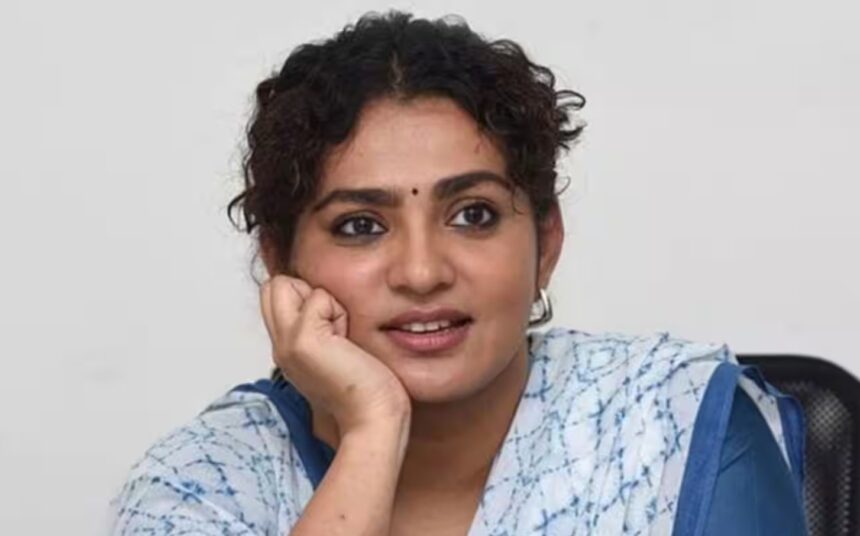
Malayalam actor Parvathy Thiruvothu has reportedly made it clear that she does not intend to return to the Association of Malayalam Movie Artists (AMMA), saying she does not feel the organisation provided the level of protection and equal respect she expects from a professional association.
Parvathy’s comments have renewed attention on her long-standing decision to remain outside AMMA. The actor was among several members who left the organisation following developments connected to the high-profile abduction and assault case involving a Malayalam actor several years ago.
She later became associated with the Women in Cinema Collective (WCC), an organisation formed by women from the Malayalam film industry to advocate for gender equality, safety and better working conditions.
Speaking about the possibility of returning to AMMA, Parvathy reportedly said she has no plans to go back, adding that she already feels represented through her association with another organisation.
See more of our coverage in your search results.
Add Hunterfly on GoogleParvathy says she does not plan to return
The discussion around Parvathy’s relationship with AMMA resurfaced after actor Shweta Menon reportedly called on people who had left the association to consider returning following changes in its leadership.
Parvathy, however, has made her position clear.
According to the statement attributed to her, she does not believe she needs to join another organisation when she is already part of a collective where she feels represented.
Her position appears to be rooted not simply in the question of membership, but in her larger concerns about whether a professional association can provide members with safety, equality and meaningful support.
“The organisation has not given me the kind of protection and equal respect that is expected of an association. Nor does it seem to me to be a place that can be offered to everyone.”
The remarks underline her concerns about what she believes a professional body should provide to its members.
See more of our coverage in your search results.
Add Hunterfly on GoogleConcerns about protection and equal respect
Parvathy’s comments focus on two fundamental expectations from any professional association: protection and equality.
Film-industry organisations often serve several functions. They may represent members’ professional interests, address workplace disputes, provide welfare support and create systems intended to protect the rights of people working in the industry.
For Parvathy, however, the question appears to be whether the organisation meets the standards of safety and equal treatment that she expects.
See more of our coverage in your search results.
Add Hunterfly on GoogleShe reportedly said that she does not feel she requires a formal organisational structure in order to feel safe.
“I feel safe without any system.”
Her remarks should be understood as her personal assessment and experience rather than as an independently established finding about every aspect of the organisation.
The larger conversation surrounding AMMA, WCC and workplace safety in Malayalam cinema has been complex and has involved numerous voices, perspectives and institutional developments over the years.
From AMMA to the Women in Cinema Collective
Parvathy has been one of the prominent voices associated with discussions around gender equality and workplace conditions in the Malayalam film industry.
She was among several actors and film professionals who became connected with the Women in Cinema Collective, commonly known as WCC.
The organisation was formed in response to broader concerns about women’s representation, safety and equality in the Malayalam film industry.
Its emergence marked an important moment in the industry’s public conversation about workplace structures and the experiences of women working in cinema.
Along with Parvathy, several other prominent figures from Malayalam cinema have been associated with efforts to advocate for stronger systems of support and greater equality within the industry.
The organisation’s formation also contributed to a wider debate about the responsibilities of professional associations and the role of institutional reform in the entertainment sector.
‘People are not taking AMMA as seriously as before’
In her reported remarks, Parvathy also commented on what she sees as a change in the public and industry perception of AMMA.
“People are not taking AMMA as seriously as they used to.”
The statement reflects her personal view of the organisation’s current standing.
Professional associations depend heavily on the confidence of their members and the wider communities they represent. That confidence can be influenced by leadership, transparency, public communication and the organisation’s response to issues affecting its members.
Parvathy’s comments therefore add to the wider discussion about how industry bodies can maintain credibility and trust.
At the same time, perceptions of AMMA are likely to differ among its members, former members and other professionals working in Malayalam cinema.
Shweta Menon’s appeal for former members to return
The discussion reportedly gained fresh momentum after Shweta Menon, following changes in AMMA’s leadership, appealed to those who had previously left the organisation to consider returning.
Such an appeal can be seen as an attempt to bring former members back into the association and rebuild a sense of collective representation.
However, Parvathy’s response suggests that leadership changes alone may not address all of the concerns that led some individuals to distance themselves from the organisation.
Her reported decision not to return indicates that her expectations extend beyond a change in office-bearers.
For her, the question appears to involve the culture, safety and equality she believes should exist within a professional organisation.
A wider debate about film-industry organisations
The discussion surrounding Parvathy’s remarks goes beyond one actor’s membership in a particular association.
It raises broader questions about what artists expect from professional organisations.
Should such bodies focus primarily on professional representation and welfare? How should they respond when members raise concerns about workplace safety? What mechanisms should exist to ensure equality and accountability?
These questions have become increasingly prominent in entertainment industries around the world.
The Malayalam film industry, like many other creative industries, has experienced significant public discussion about workplace conditions, representation and the need for stronger institutional support.
Parvathy’s decision to remain outside AMMA is therefore part of a much larger conversation about trust and the role of industry bodies.
Parvathy remains firm on her position
For now, Parvathy appears firm in her decision.
Her reported statement that she will not return to AMMA reflects a position she has maintained through a period of considerable discussion about institutional reform and women’s representation in Malayalam cinema.
She also indicated that she does not feel the need to join an additional organisation simply for the sake of belonging to one.
Her focus, according to the reported remarks, remains on whether an organisation provides the values and support she believes its members deserve.
That distinction is important.
The issue, from her perspective, is not merely about membership but about the quality of representation and the sense of safety and equality available within an institution.
The conversation around representation continues
Parvathy’s comments are likely to generate further discussion within the Malayalam film industry and among audiences following the developments around AMMA’s leadership.
Her position also highlights the continued importance of conversations around workplace safety, equality and accountability in cinema.
The film industry is built on the work of actors, technicians, writers, directors and numerous other professionals. For professional associations to remain meaningful, many observers believe they must be capable of responding to the changing expectations of the people they represent.
Parvathy’s reported refusal to return to AMMA does not end that larger discussion. Instead, it adds another significant voice to an ongoing debate about what reform, representation and institutional support should look like.
As developments continue, official statements from AMMA, the WCC and the individuals involved will remain important for understanding the evolving situation.