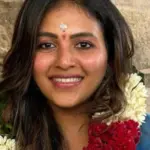




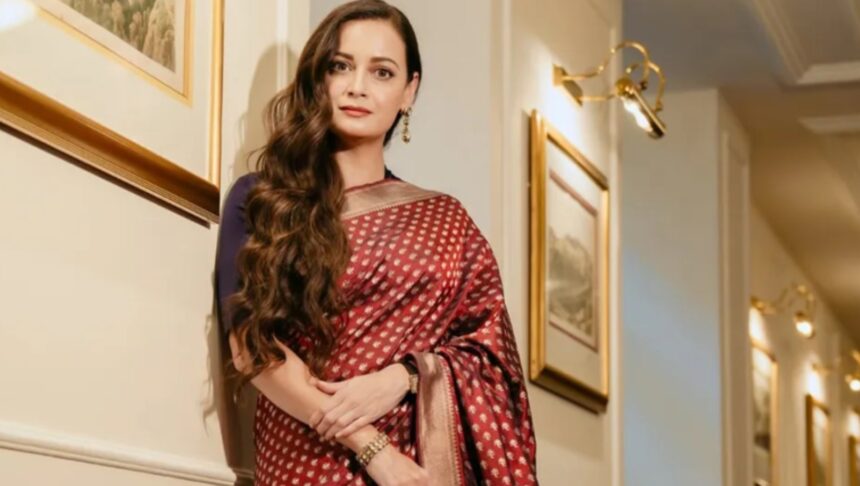
Dia Mirza has offered a thoughtful reminder that some of the most meaningful fashion statements cannot be measured by a price tag. At the launch of Netflix’s Operation Safed Sagar in New Delhi, the actor stepped out in an exquisite Banarasi saree belonging to her mother, pairing generations-old craftsmanship with understated contemporary styling.
In a fashion landscape often dominated by new collections, celebrity loans and instantly recognisable labels, Dia’s choice stood apart precisely because it was personal.
The saree was not simply another occasion-wear selection. It carried family history.
And that made the look feel less like a conventional celebrity fashion appearance and more like an example of quiet luxury rooted in memory, craftsmanship and inheritance.
See more of our coverage in your search results.
Add Hunterfly on GoogleDia Mirza’s Mother’s Banarasi Saree Takes Centre Stage
The focal point of Dia’s appearance was a richly woven red Banarasi silk saree featuring intricate golden motifs across the fabric.
The vibrant red base created an immediate visual impact, while the gold weaving brought depth and a sense of traditional grandeur.
Across the body of the saree, floral motifs were arranged with a fine jaali-inspired pattern, framed by traditional gold zari borders.
The overall effect was ornate without requiring additional embellishment.
Rather than layering the saree with numerous accessories, Dia allowed the textile itself to remain the star.
See more of our coverage in your search results.
Add Hunterfly on GoogleThat decision is particularly effective with Banarasi textiles, where the weave, motifs and zari can carry much of the visual drama on their own.
The Pallu Adds Another Layer of Craftsmanship
If the body of the saree established its traditional character, the pallu intensified it.
The drape featured heavier zari work along with prominent paisley and floral motifs.
See more of our coverage in your search results.
Add Hunterfly on GooglePaisley forms, floral compositions and trellis-like patterns have long been associated with the visual vocabulary of Indian textiles, including Banarasi weaving.
Many of these decorative influences have historical connections to Persian and broader Central Asian design traditions that became integrated into Indian textile traditions over centuries.
The result is a textile language that feels simultaneously familiar and elaborate.
For Dia, the pallu provided a natural focal point without requiring a heavily embellished blouse or an elaborate styling concept.
Why Banarasi Weaving Remains So Special
Banarasi sarees are celebrated for their intricate weaving, silk textiles and use of zari.
Traditionally associated with Varanasi, the craft has developed into one of India’s most recognisable handloom traditions.
A finely made Banarasi can require considerable skill and time, depending on the complexity of the design, weave and production technique.
Its appeal is therefore not limited to visual richness.
The textile carries the labour of the weaver within it.
That becomes even more significant when a saree is passed between generations.
Instead of being replaced when a new fashion trend arrives, a well-preserved handloom saree can continue acquiring emotional value with every occasion on which it is worn.
The Deep Purple Blouse Creates a Striking Contrast
Dia chose a deep purple high-neck blouse with half sleeves to accompany the red saree.
The decision was relatively restrained considering the richness of the textile.
Rather than selecting a blouse covered in embroidery or metallic embellishment, the solid purple created a clean block of colour against the patterned drape.
The high neckline also introduced a more contemporary element into the traditional ensemble.
This balance between heritage textile and minimal tailoring prevented the overall appearance from becoming overly ornate.
It also demonstrated a useful styling principle: when the saree has substantial visual detail, the blouse does not necessarily need to compete with it.
Polki Jewellery Keeps the Accessories Traditional
Dia accessorised the saree with drop-style polki earrings, adding another traditional element without overwhelming the ensemble.
Polki jewellery, traditionally associated with uncut diamonds set in jewellery, has long been part of Indian occasion dressing.
The choice complemented the zari in the saree while maintaining the overall emphasis on heritage craftsmanship.
Notably, Dia did not appear to rely on multiple layers of jewellery.
The restraint allowed the earrings to function as an accent rather than another focal point.
Soft Glamour Completes the Look
Her beauty styling followed the same philosophy.
Dia wore her hair in soft curls, giving the traditional saree a relaxed finish.
Her makeup was polished but not overly dramatic, with winged eyeliner and a nude-toned lip providing definition without distracting from the textile.
The combination of warm colours, classic eye makeup and softly styled hair reinforced the timeless quality of the ensemble.
Nothing appeared designed merely to chase a short-lived beauty trend.
Instead, the styling worked with the saree.
The Real Meaning Behind Wearing a Mother’s Saree
The most interesting element of Dia’s look is not necessarily its colour palette or styling.
It is the fact that the saree belonged to her mother.
A garment passed down within a family can carry a kind of value that new luxury fashion cannot reproduce.
There may be memories associated with the occasions on which it was worn, photographs in which it appeared, or simply the familiarity of seeing a parent wear the same piece.
Every subsequent wearer adds another chapter.
That makes an inherited saree more than clothing.
It becomes a material record of family history.
Why Inherited Fashion Feels Different From Vintage Fashion
There is an important distinction between buying vintage clothing and inheriting something from a family member.
Vintage fashion can certainly have historical and cultural value, but an inherited garment comes with a personal story that is unique to the wearer.
Dia’s Banarasi saree illustrates that difference beautifully.
Its significance isn’t simply that it is old or handcrafted.
It belongs to her mother.
That connection transforms the meaning of the garment.
The saree becomes a bridge between generations rather than simply a piece of traditional clothing.
The Quiet-Luxury Lesson in Dia Mirza’s Look
The phrase “quiet luxury” has become heavily associated with neutral colour palettes, understated designer clothing and discreet branding.
Dia’s appearance offers a more meaningful interpretation of the concept.
Here, luxury is not communicated through a visible logo or a newly released collection.
It is communicated through craftsmanship, provenance and emotional value.
The saree’s intricate weaving demonstrates the skill involved in creating it.
Its age and preservation give it provenance.
Its connection to Dia’s mother gives it emotional value.
Together, these elements make the piece genuinely distinctive.
Why Rewearing Heirlooms Matters
Dia’s choice also resonates with the growing interest in more thoughtful approaches to fashion.
Wearing an existing garment instead of acquiring something new for every occasion can extend its life and challenge the idea that meaningful celebrity fashion must always involve something newly purchased.
Traditional Indian wardrobes have historically embraced this idea.
Sarees, jewellery and other heirloom pieces are frequently passed between mothers, daughters, sisters and other family members.
The practice predates modern conversations around sustainable fashion by generations.
In that sense, inherited Indian clothing offers a particularly powerful model of longevity.
A Banarasi Saree That Transcends Trends
Fashion trends change quickly.
Silhouettes that dominate one season can feel dated a few years later.
A beautifully woven Banarasi saree, however, operates differently.
Its appeal is tied less to a seasonal trend and more to the quality of its textile, its motifs and the craftsmanship behind it.
That is why the saree can move from one generation to another without losing its relevance.
Dia’s styling demonstrates that traditional craftsmanship does not need to be dramatically reinvented to look contemporary.
Sometimes, all it requires is thoughtful pairing.
A solid-colour blouse, restrained jewellery and polished beauty styling were enough to give the heirloom a fresh context.
Dia Mirza Makes a Case for Fashion With a Story
At the Operation Safed Sagar launch, Dia Mirza’s fashion choice ultimately offered something more valuable than another red-carpet trend.
She showed how clothing can preserve memory.
The red Banarasi saree belonged to her mother, but by wearing it herself, Dia gave the textile another moment in the public eye and another chapter in its story.
Its intricate zari, floral jaal patterns and paisley-rich pallu speak to India’s longstanding textile heritage.
Its journey from one generation to another speaks to something more intimate.
And perhaps that is the most enduring definition of luxury: not simply owning something expensive, but owning something meaningful enough to keep, preserve and eventually pass on.