








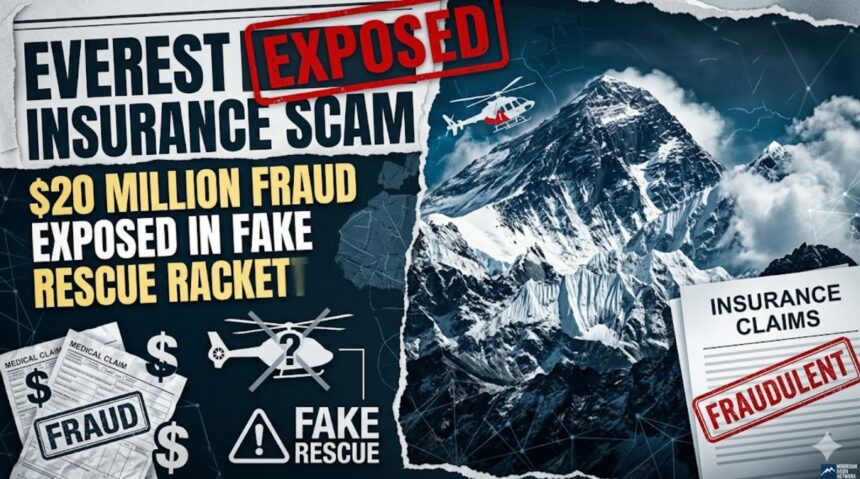
A Massive Scam Uncovered
A major insurance fraud linked to Mount Everest has been uncovered by Nepal Police, exposing a scheme worth nearly $20 million.
Authorities allege that trekkers were deliberately made ill to trigger fake rescue operations and claim insurance payouts.
How the Scam Worked
Investigators revealed that some guides allegedly mixed baking soda into tourists’ food, causing severe stomach issues that mimicked altitude sickness.
Once trekkers fell sick, they were reportedly pressured into emergency helicopter evacuations, which were later billed to insurance companies at high costs.
See more of our coverage in your search results.
Add Hunterfly on GoogleFake Emergencies, Real Profits
According to officials, the goal was to stage convincing medical emergencies so that insurers would approve expensive evacuations and treatments without questioning the claims.
The operation reportedly involved forged medical reports, manipulated flight records, and inflated hospital bills to secure payouts.
A Wide Network Involved
The investigation suggests a coordinated network that included trekking guides, helicopter operators, trekking agencies, and hospital representatives.
Authorities have charged 32 individuals under organized crime and fraud laws, marking one of the largest scams in the trekking sector.
Hundreds of Fake Rescues
Police estimate that over 300 fake rescue missions took place between 2022 and 2025.
See more of our coverage in your search results.
Add Hunterfly on GoogleThese operations not only cost insurers millions but also raised serious concerns about the safety and ethics of trekking services in the region.
Nepal’s tourism sector, which supports over a million jobs, may face long-term consequences.
Officials noted that increasing fraud cases have already led some insurance companies to reconsider or withdraw trekking coverage, potentially affecting future climbers.
See more of our coverage in your search results.
Add Hunterfly on GoogleCase Timeline
The scam was first flagged in 2018 but gained renewed attention in 2025 when authorities reopened the investigation.
With around 500 climbers expected to attempt Everest expeditions this year, the case has raised fresh concerns about safety, regulation, and oversight in high-altitude tourism.