






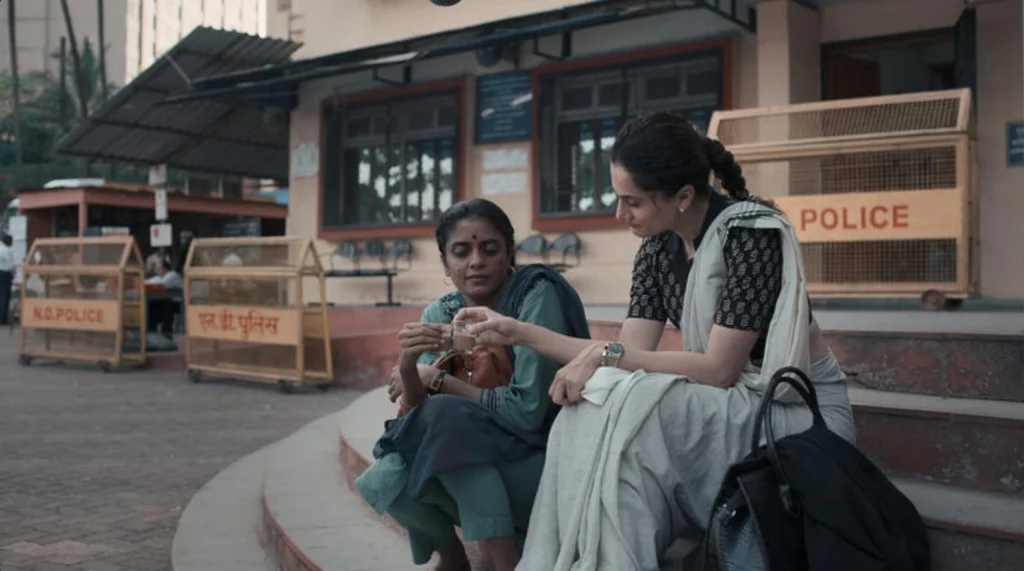
A content household collapses when a woman steps outside and becomes a victim of brutal crime. What follows is an intense courtroom battle led by Taapsee Pannu as Raavi, a sharp and uncompromising lawyer fighting for justice. The survivor is portrayed by Kani Kusruti in Assi, a film whose title references the alarming statistic that nearly 80 rape cases are reported daily in India.
The narrative tackles witness disappearances, evidence tampering and victim-blaming, all while spotlighting systemic challenges within the justice process. Yet beyond the legal drama, it is the performances and dialogue that leave a lasting impact.
Taapsee was recently in Kolkata for a special screening of the film. Dressed in a summer floral top paired with a brown skirt and matching bandana, she spoke candidly about her character, meaningful cinema and her evolving fashion sensibilities.
“Raavi Goes Through Stages”
Having earlier played a lawyer in Mulk, also directed by Anubhav Sinha, Taapsee acknowledges that comparisons are inevitable.
See more of our coverage in your search results.
Add Hunterfly on GoogleShe explains that while both characters share the same profession, their emotional journeys differ significantly. In Mulk, the case was personal from the outset. In Assi, Raavi begins as a public prosecutor handling multiple cases clinically and professionally. Over time, however, the human dimension begins to surface. Eventually, she feels compelled to take the matter personally—not just as a lawyer, but as a woman confronting societal realities.
This marks Taapsee’s third collaboration with Anubhav Sinha. When asked about their creative synergy, she attributes it less to exclusivity and more to shared ideological alignment and timing in their careers.
On Real-Life Parallels and Responsibility
Assi draws heavily from real-world events. Taapsee admits that the current social climate can feel unsettling. However, she believes retreat is not the answer.
Quoting poet Uday Prakash, she reflects on the idea that silence and inaction diminish society more than fear does. For her, meaningful participation—however small—remains essential.
Choosing Scripts With Clarity
Taapsee says she reads every script thoroughly before evaluating the filmmaker’s previous work to ensure her creative vision aligns with the written material. She limits the number of films she does annually and prioritises ideological resonance over commercial scale.
See more of our coverage in your search results.
Add Hunterfly on GoogleWhile she has worked with first-time directors, she typically evaluates their aesthetic sensibilities through prior writing or advertising work. Alignment in messaging and authenticity ultimately determine her choices.
Bengali Cinema and Language Barriers
Having collaborated with several Bengali filmmakers, Taapsee acknowledges the warmth she has received in Kolkata. However, she candidly admits that language learning has been challenging for her, referencing her early struggles while working in Tamil and Telugu films.
Although she feels a strong connection with Bengali audiences, she remains cautious about committing to a Bengali-language film unless she can fully master the linguistic demands. She does express openness to portraying a Bengali character in a Hindi project.
See more of our coverage in your search results.
Add Hunterfly on GoogleDanish Films: A Possibility?
Taapsee also addressed the idea of working in Danish cinema. Having spent time learning the language, she says she can manage basic communication. She admires Denmark’s consistent presence in global awards circuits, particularly at the Oscars, and finds their filmmaking discipline impressive.
However, language remains the primary hurdle. She indicates she would consider a role that aligns naturally with her identity—such as playing an Indian character in a Danish production.
Reinventing the Sari
Post Haseen Dillruba, saris have become central to Taapsee’s personal style. While she previously wore traditional South Indian drapes during her early career, the film encouraged her to explore more contemporary styling.
She now favours cotton mulmul saris for everyday wear, reserving heavier pieces for festive occasions. Experimentation, she says, helped her understand why younger women often find saris cumbersome—and inspired her to mix traditional drapes with modern elements for comfort and ease.
Assi is currently running in theatres.