





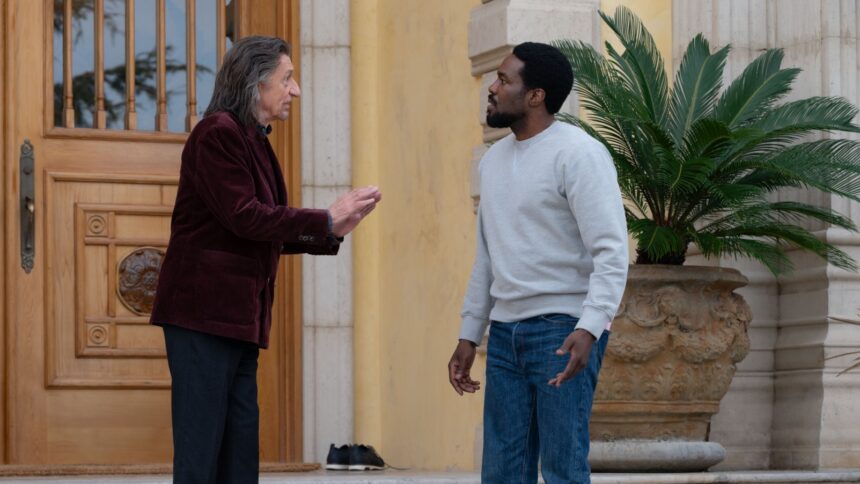
Marvel Studios is testing new creative ground with Wonder Man, its upcoming Disney+ series that trades large-scale superhero spectacle for a sharp, character-driven exploration of Hollywood, ambition, and identity. Led by Yahya Abdul-Mateen II, the series presents a version of Marvel rarely seen before: a superhero story where extraordinary powers are not an advantage, but a liability.
The concept for Wonder Man originated in an unlikely moment of on-set humor. During the production of Shang-Chi and the Legend of the Ten Rings, director Destin Daniel Cretton casually joked that Marvel could build an entire streaming series around Trevor Slattery, the washed-up actor played by Ben Kingsley. Slattery, previously introduced as comic relief, was best known for his ill-fated attempt to impersonate a global terrorist in Iron Man 3.
As a joke, Marvel’s art department created a mock poster titled Trevor Goes to Hollywood. What began as a playful aside quickly evolved into a serious creative spark.
“That was when I realized we might actually have to make this show,” Cretton later said.
See more of our coverage in your search results.
Add Hunterfly on GoogleAt the same time, Marvel was already developing a project centered on Simon Williams, a long-standing comic book character who assumes the mantle of Wonder Man. Traditionally, Simon is portrayed as a wealthy industrialist gifted with superhuman abilities who later becomes a movie star. Marvel Studios president Kevin Feige pushed for a reversal of that formula—one that better reflected the studio’s desire to experiment with tone and structure.
In this reimagining, Simon Williams is first and foremost a struggling actor. His superpowers are incidental, inconvenient, and often disruptive to his professional life. Abdul-Mateen’s Simon is not chasing villains across cities; he is chasing auditions, relevance, and a sense of purpose in an unforgiving industry.
“What if his powers weren’t the solution?” said Brad Winderbaum, Marvel’s head of television and animation. “What if they were the obstacle? This was never designed to be a show about beating up bad guys. The powers get in the way of what Simon actually wants—to act.”
That creative decision places Wonder Man firmly outside Marvel’s usual narrative framework. Rather than anchoring the story around world-ending stakes or interconnected franchise mythology, the series focuses on personal frustration, artistic compromise, and the absurdities of modern Hollywood. It is as much a satire of the entertainment industry as it is a superhero story.
The inclusion of Trevor Slattery further sharpens that perspective. Kingsley’s character—a performer whose career has been defined by desperation and deception—serves as both mentor and cautionary tale. His presence reinforces the show’s central theme: performance is survival, and authenticity often comes at a cost.
See more of our coverage in your search results.
Add Hunterfly on GoogleBy pairing Simon Williams with Trevor Slattery, Marvel creates a dynamic that explores fame, failure, and reinvention from two ends of the career spectrum. One is a gifted newcomer sabotaged by circumstances he cannot control; the other is a seasoned actor haunted by the consequences of a role taken too far.
Wonder Man arrives at a pivotal moment for Marvel Studios, as the company reassesses its Disney+ strategy amid shifting audience expectations and franchise fatigue. With fewer projects and a renewed emphasis on quality over quantity, the studio appears increasingly open to genre-bending narratives that stand on their own.
Industry observers see Wonder Man as part of that recalibration—less a traditional Marvel entry and more a prestige television experiment. Its grounded storytelling, self-awareness, and emphasis on character psychology suggest an attempt to appeal beyond the core superhero audience.
See more of our coverage in your search results.
Add Hunterfly on GoogleIf successful, Wonder Man could signal a broader creative evolution for Marvel television—one where superpowers exist not as wish fulfillment, but as complications in deeply human stories.