






Punjabi folk music has always carried the spirit of rebellion. From the war ballads of the Sikh era to Sufi poetry that challenged rigid orthodoxy, and from songs of migration to anthems of resistance during the farmers’ movement, rebellion is woven deeply into its cultural fabric.
At its heart, Punjabi folk is rooted in harvest songs, verses by Sufi poets like Bulleh Shah and Shah Hussain, and stories of love, longing, and loss. Over decades, it has evolved into a global force through legendary voices such as Surinder Kaur, Kuldeep Manak, Prakash Kaur, and Gurdas Maan, and later through contemporary trailblazers like Sidhu Moose Wala, Bohemia, Dr Zeus, and Imran Khan.
Yet, as hip-hop and digital virality reshaped the Punjabi music landscape, quieter, soul-stirring folk traditions were often pushed aside in favour of high-energy party anthems and algorithm-friendly hooks.
Ironically, the same internet that fuelled this shift is now nurturing a revival.
See more of our coverage in your search results.
Add Hunterfly on GoogleA Folk Revival in the Digital Age
Amid trending reels and viral sounds, a new counter-movement is gaining momentum — one that reclaims Punjabi folk and Sufi poetry without diluting its essence. At the forefront of this revival is Rashmeet Kaur, whose interpretations breathe new life into traditional verses while remaining rooted in authenticity.
Her rendition of the classic folk song ‘Bajre Da Sitta’ became a defining moment in her career, introducing her to a global audience. Without altering the song’s soul, Rashmeet added a contemporary sonic texture that resonated across generations.
“Bajre Da Sitta was my turning point,” Rashmeet said in an interview. “It started trending on TikTok in Canada before it reached India. People began connecting with it, making short videos, and soon I was being called the ‘Bajre Da Sitta girl’.”
The song’s success highlighted something deeper — a hunger for music that feels rooted yet relevant.
A Journey Shaped by Tradition
Rashmeet’s musical journey began with Gurbani and was shaped by her exposure to Punjabi weddings, where folk singing remains an intrinsic tradition. Inspired initially by her maternal grandmother, she credits these early influences for training her ear and embedding folk music into her identity.
See more of our coverage in your search results.
Add Hunterfly on Google“Punjabi folk is in my blood. It has become my swag factor,” she notes.
Her rise to prominence came after winning Amazon Prime Video’s ‘The Remix’, judged by Sunidhi Chauhan, Amit Trivedi, and Nucleya. Soon after, she collaborated with Major Lazer, Diplo, and Nucleya on the album Music Is the Weapon, which earned a Grammy nomination for the track Jadi Buti.
Poetry at the Core
For Rashmeet, folk music is inseparable from poetry. Much of her work draws from Sufi poets like Shah Hussain and Bulleh Shah, whose verses continue to speak to modern audiences.
See more of our coverage in your search results.
Add Hunterfly on GoogleHer singles and live projects such as Musafir, Kaura, and Faqeeran reflect this philosophy. Rather than modernising poetry for trend value, she uses contemporary beats — including hip-hop and boom bap — as vehicles to carry timeless words forward.
“Punjabi folk is timeless, the poetry is timeless,” she explains. “I want people to feel that I’m just the medium connecting them to these powerful verses.”
Connecting with the Younger Generation
Rashmeet believes today’s youth are rediscovering folk music through digital platforms, not as nostalgia but as meaningful art.
“Young musicians are smarter now. They’re using Instagram and digital spaces as tools to express poetry and music,” she says.
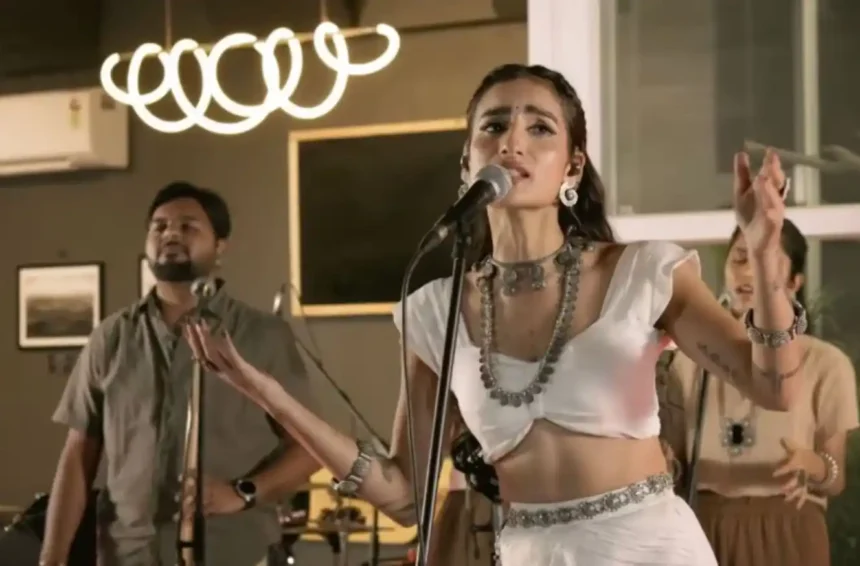
Her Kaura Live Sessions, inspired by NPR’s Tiny Desk, emerged from this belief. The stripped-down performances helped listeners engage more deeply with the meanings behind her songs.
Influences Beyond Borders
While deeply rooted in Punjabi culture, Rashmeet draws inspiration from a wide range of global artists including Russ, Tom Misch, Arijit Singh, Beyoncé, Doechii, Doja Cat, FKA Twigs, and John Mayer.
What unites these influences, she says, is authenticity.
“Their art makes them magnetic. They’re so connected to their craft that it shows in everything they do.”
A Folk Tradition That Endures
Rashmeet firmly believes Punjabi folk music will never fade. To her, it is the original root from which all modern Punjabi music grows.
She also embraces Western influences, especially how younger artists fuse folk melodies with rap and hip-hop flows, creating hybrid forms that honour tradition while pushing boundaries.
Beyond music, Rashmeet expanded her public presence by participating in Fear Factor: Khatron Ke Khiladi 13 in 2023, showcasing another facet of her personality.
Conclusion
From ‘Bajre Da Sitta’ to ‘Faqeeran’, Rashmeet Kaur represents a new generation of artists reclaiming Punjab’s folk legacy with intention and respect. In blending poetry, tradition, and modern soundscapes, she is not reinventing folk — she is reminding audiences why it has endured for centuries.