







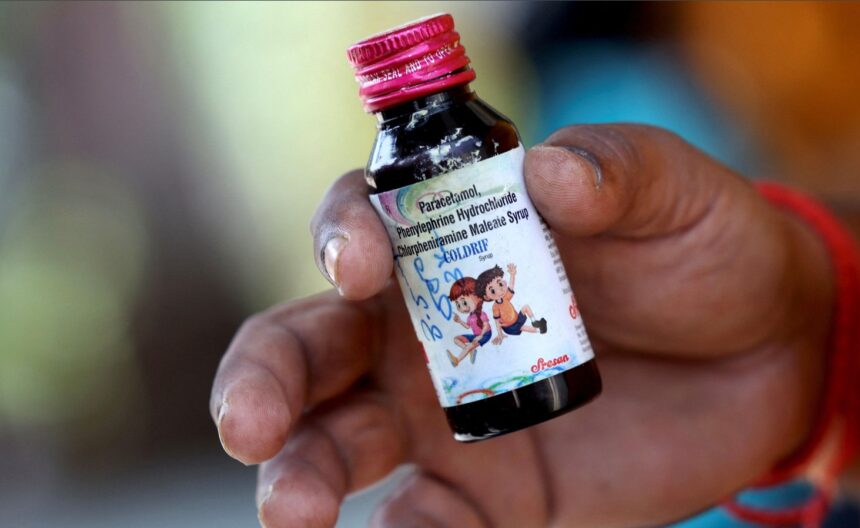
New Delhi, Oct. 9: The World Health Organization (WHO) has warned that India faces a “regulatory gap” in testing domestically marketed cough syrups after 17 children under the age of five died from toxic contamination.
According to Indian health officials, the fatalities occurred over the past month after the children consumed Coldrif, a cough syrup that contained dangerously high levels of diethylene glycol (DEG)—a toxic industrial solvent used improperly in some pharmaceutical formulations. Laboratory results revealed DEG levels nearly 500 times the permissible limit.
Following confirmation of the contamination on October 2, Indian authorities banned Coldrif and issued a fresh advisory naming two more syrups — Respifresh and RELIFE — for containing the same chemical. The alert described DEG as “a toxic chemical that can cause kidney failure, neurological complications and death, particularly in children.”
WHO: India Must Tighten Domestic Medicine Screening
A WHO spokesperson told Reuters that the agency had received confirmation from Indian officials of three contaminated products and that none were officially exported.
See more of our coverage in your search results.
Add Hunterfly on GoogleHowever, the agency cautioned that unofficial exports cannot be ruled out and said the source of contamination is still under investigation.
“WHO expresses deep concern over these developments and emphasizes the regulatory gap in DEG/EG screening for domestically marketed medicines in India,”
— WHO spokesperson via email.
WHO reiterated its long-standing advisory against cough and cold medicines for children, citing limited benefits and potential toxicity.
Factories Under Investigation
The contaminated Coldrif syrup was manufactured by Sresan Pharmaceutical Manufacturer, based in Tamil Nadu. Officials said the company’s operations have been suspended, and police have filed a case of manslaughter.
When Reuters visited the closed factory in Kancheepuram, inspectors were seen posting notices demanding records of ingredient sourcing and production details. Behind the shuttered gates, discarded bottles and burnt medicines were reportedly found, with a strong chemical odour lingering in the air.
Authorities are now inspecting 19 other manufacturing units across six states, including Shape Pharma and Rednex Pharmaceuticals in Gujarat—where state officials said cough-syrup samples were “not of standard quality.” Production and distribution have been halted pending further tests.
See more of our coverage in your search results.
Add Hunterfly on GoogleRegulatory Lapses and Global Scrutiny
India’s Drug Controller General Rajeev Raghuvanshi admitted in an advisory on October 7 that inspections revealed serious lapses, including manufacturers failing to test every batch of raw material as legally required.
While the note did not name specific firms, it confirmed that inspections targeted companies previously flagged for substandard quality.
The renewed spotlight on India’s pharmaceutical sector follows multiple international tragedies linked to DEG contamination:
See more of our coverage in your search results.
Add Hunterfly on Google- Gambia, Uzbekistan and Cameroon (2022): Over 140 child deaths traced to Indian-made syrups.
- India (2019): Twelve children died from DEG poisoning in Jammu.
India’s Pharmaceutical Footprint
India is the world’s third-largest drug producer by volume, valued at about $50 billion, with half its revenue coming from exports.
It supplies nearly 40 percent of generic medicines used in the United States and over 90 percent of all medicines in many African countries.
The recent deaths, however, threaten to damage India’s reputation as a trusted global pharmacy unless stricter domestic oversight is enforced.
What Happens Next
The Health Ministry has ordered a nationwide inspection of syrup manufacturers, while state and central drug authorities are expected to review testing protocols for DEG and ethylene glycol in all liquid formulations.
The WHO said it will consider issuing a Global Medical Products Alert on Coldrif once official confirmation and sample analyses are complete.
Public-health experts say this incident underscores the urgent need for stronger quality control, transparent testing, and third-party certification before medicines reach local shelves.
Conclusion
The deaths of 17 children have reignited global concern over pharmaceutical safety standards in India. While the country remains a key supplier of affordable medicine worldwide, the WHO’s warning highlights the importance of closing regulatory gaps to prevent future tragedies and restore confidence in “Made in India” drugs.
Disclaimer:
This report is based on verified information from WHO, the Health Ministry of India, and Reuters. The investigation is ongoing. Views expressed by quoted sources are their own.