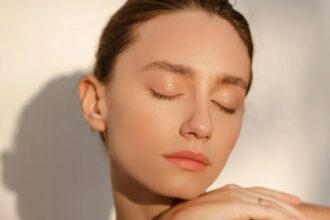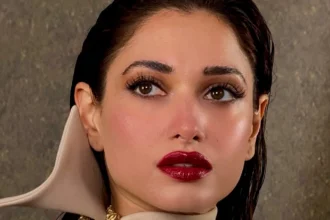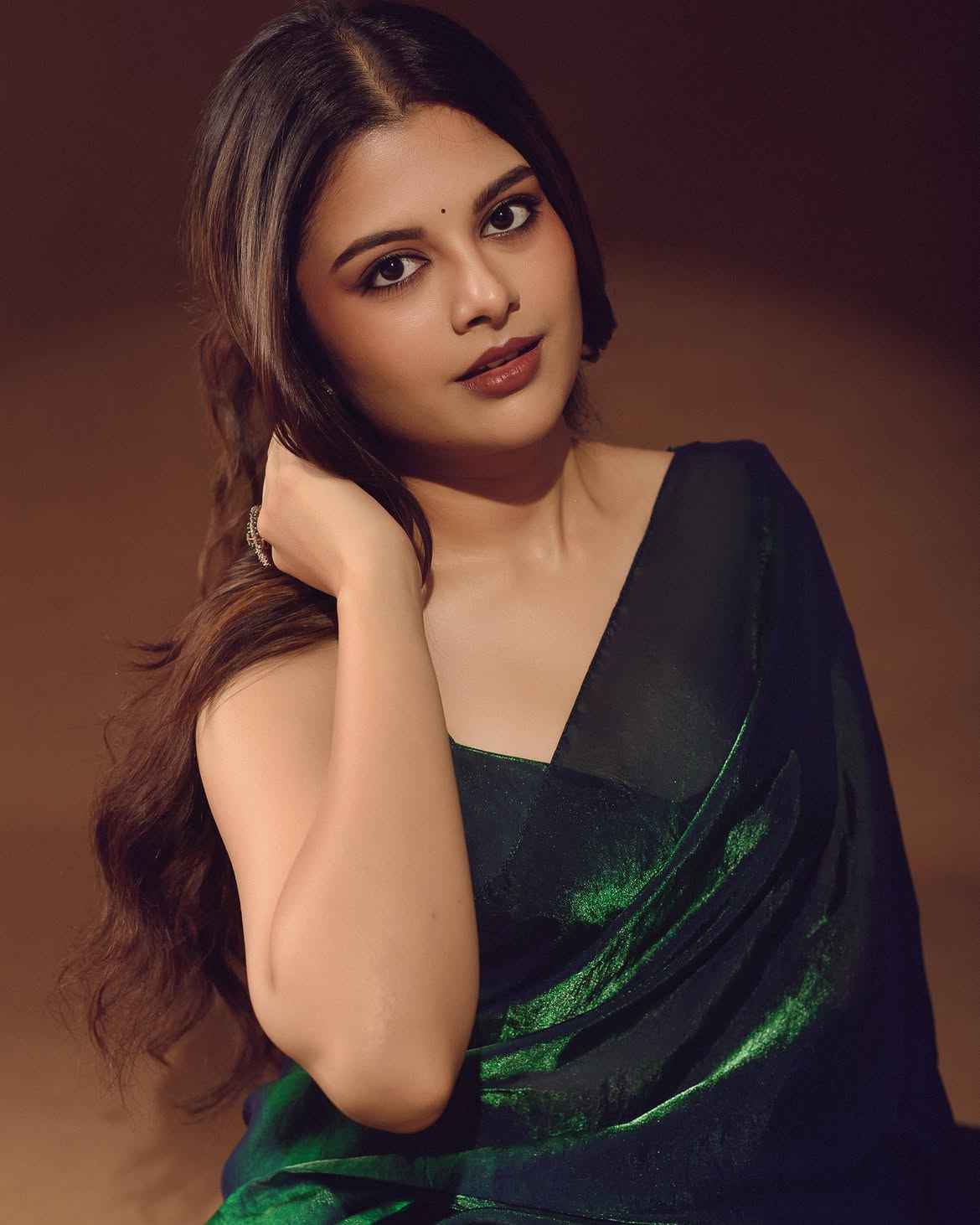








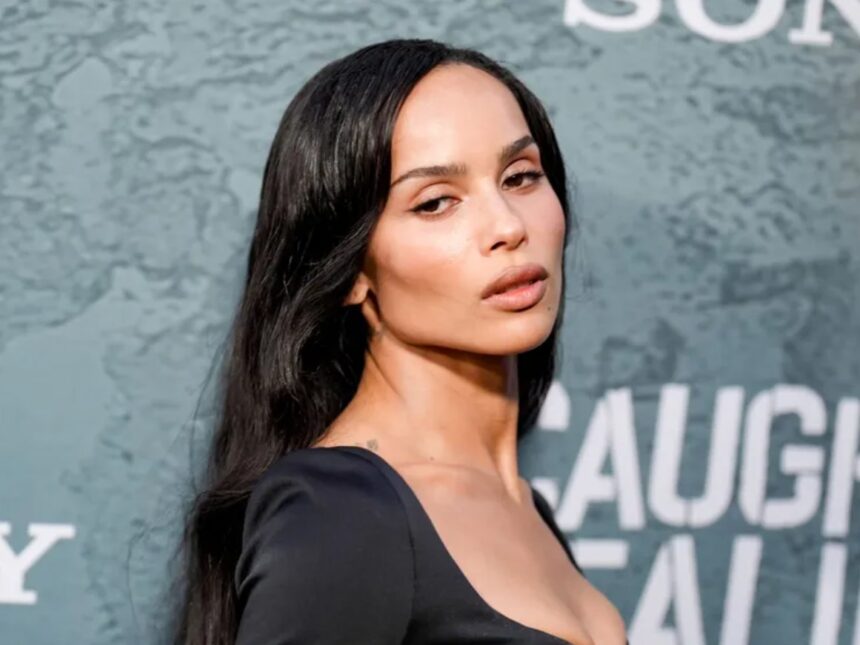
The no-makeup makeup look is less about wearing no makeup and more about using just enough product to enhance your natural features. Celebrity makeup artists explain how to get the effect at home.
The no-makeup makeup look has become one of beauty’s most enduring approaches to getting ready. Instead of building a full-coverage base or creating sharply defined features, the technique focuses on making the complexion look fresh, even and naturally radiant.
The appeal is its flexibility. Freckles can remain visible, brows can retain their natural shape and skin can still look like skin. Makeup simply becomes a subtle finishing layer rather than the most noticeable part of the face.
Makeup artists who regularly work with celebrities say the secret is not necessarily owning fewer products. It is using less of each product and applying it precisely.
Makeup artist Shelby Smith, whose clients have included Kylie Jenner, describes minimalist makeup as an approach centred on enhancing rather than disguising natural features. The look typically combines lightweight complexion products, groomed brows, subtly defined lashes and understated colour on the cheeks and lips.
Makeup artist Jo Baker similarly puts the emphasis on the complexion, describing minimalist beauty as carefully executed details built around beautiful-looking skin.
Melanie Inglessis, whose celebrity clients have included Rosamund Pike, Kirsten Dunst and Jenna Ortega, has also pointed to a broader shift away from using makeup primarily to correct perceived imperfections.
The result is a look that can work for an everyday routine, a special occasion or even a red-carpet-inspired beauty moment.
Here are five steps to create it.
1. Begin with well-prepped skin
The most convincing no-makeup makeup starts before foundation or concealer touches your face.
When the skin is properly hydrated, you may find that you need less complexion product to achieve an even, comfortable finish.
Start with a skincare routine appropriate for your skin type. A lightweight hydrating serum can be followed by moisturiser, while sunscreen should be the final daytime skincare step.
Do not treat skincare as a competition to see how many products you can layer. Too many rich or incompatible products can cause makeup to slide, pill or sit unevenly.
Give skincare a little time to settle before applying makeup.
For a naturally fresh finish, the objective is simple: comfortable, hydrated-looking skin rather than an artificially glossy complexion.
2. Replace heavy foundation with targeted coverage
One of the easiest ways to make a makeup look appear more natural is to stop treating the entire face as though it needs the same amount of coverage.
Instead of automatically applying a full layer of foundation, try a lightweight skin tint or sheer complexion product if you want some overall evening of the skin tone.
Then use concealer only where additional coverage is actually necessary.
That might mean under the eyes, around the nose, over a blemish or on areas where redness is more noticeable.
Makeup artist Omayma Ramzy recommends thinking about brightening and subtly lifting the face rather than relying heavily on contour.
The application technique matters as much as the product. Press and blend small amounts of concealer into the skin rather than painting on a thick layer.
Your fingers can work well for small areas, while a soft brush or damp makeup sponge can help diffuse edges.
The goal is not to make every pore or mark disappear.
A little natural skin showing through is part of what makes the finished look believable.
3. Keep the brows groomed but recognisably yours
Brows provide much of the structure of the face, which is why they can have a surprisingly large effect on a minimalist makeup look.
Instead of completely redrawing your brows, work with their existing shape.
Brush the hairs upward and outward, then use a fine brow pencil or powder to fill only obvious sparse areas. Follow with a clear or tinted brow gel to keep everything in place.
Ramzy favours brushing brows upward before adding hair-like definition, while Smith recommends lightly filling gaps and setting the brows with gel.
The important distinction is between grooming and transforming.
A natural brow does not have to be perfectly symmetrical or heavily filled. Slight variation can actually make the overall makeup appear more effortless.
4. Define the eyes without overpowering them
The eyes do not need a complicated eyeshadow look to stand out.
For an especially pared-back routine, curling the lashes and applying one coat of mascara may be enough.
Brown mascara can create a softer effect, while black gives the lashes more definition.
If you prefer eyeliner, keep it close to the lash line. A very thin line can subtly frame the eyes without becoming the dominant feature.
A softly smudged pencil can also work when you want more definition without the sharp appearance of a graphic liner.
Makeup artist Melanie Inglessis has used lash-line definition for a subtle effect, while Baker has highlighted the impact of keeping mascara application restrained.
There is no requirement to use every technique.
If your eyes already have strong natural definition, you may prefer to skip eyeliner altogether.
5. Finish with a believable flush of colour
The final stage is adding enough colour to make the face look alive.
Cream blush is particularly useful because it can melt into the complexion and create a softer finish than heavily powdered products.
Choose a shade that resembles the sort of colour your cheeks naturally develop. Depending on your complexion, that could be a muted pink, peach, rose, berry or warm terracotta.
A small amount can also be tapped onto the lips for a coordinated effect.
Lip stains are another useful option because they provide a sheer wash of colour rather than a dense layer of lipstick.
If you want slightly more definition, use a lip pencil close to your natural lip colour and soften the edges with your fingertip.
The finished effect should look like your own colouring, only slightly enhanced.
The secret to no-makeup makeup is restraint
The biggest mistake with minimalist makeup is assuming that the look is effortless simply because it contains fewer visible products.
In practice, a natural finish often requires more precision.
Heavy makeup can disguise uneven application because additional layers create more visual coverage. With a minimalist look, every product needs to be placed carefully because there is less makeup to hide mistakes.
That is why makeup artists repeatedly return to the same principles: prepare the skin, apply thin layers, blend thoroughly and stop before the makeup begins to look like a mask.
You don’t have to follow every beauty rule
No-makeup makeup is best treated as a technique rather than a strict formula.
Some people may want strong brows and barely-there lips. Others may prefer a bold lip with almost no eye makeup. Someone else may want visible freckles, flushed cheeks and a little more concealer around the eyes.
There is no single definition of “natural” beauty.
The purpose of minimalist makeup is not to make everyone look identical. It is to give you control over which features you want to emphasise while allowing the rest of your face to remain visible.
A simple no-makeup makeup checklist
For a quick everyday version, you can keep the routine to:
- Hydrating skincare
- Broad-spectrum daytime sunscreen
- Lightweight skin tint, if desired
- Concealer for targeted areas
- Brow pencil or gel
- Lash curler and mascara
- Cream blush
- Lip stain or tinted balm
- A small amount of setting powder only where needed
The order can be adjusted according to your products and skin type.
Most importantly, use only the amount you need.
The bottom line
The modern no-makeup makeup look is not really about pretending you’re wearing nothing. It is about letting natural skin, texture and individual features remain part of the finished face.