






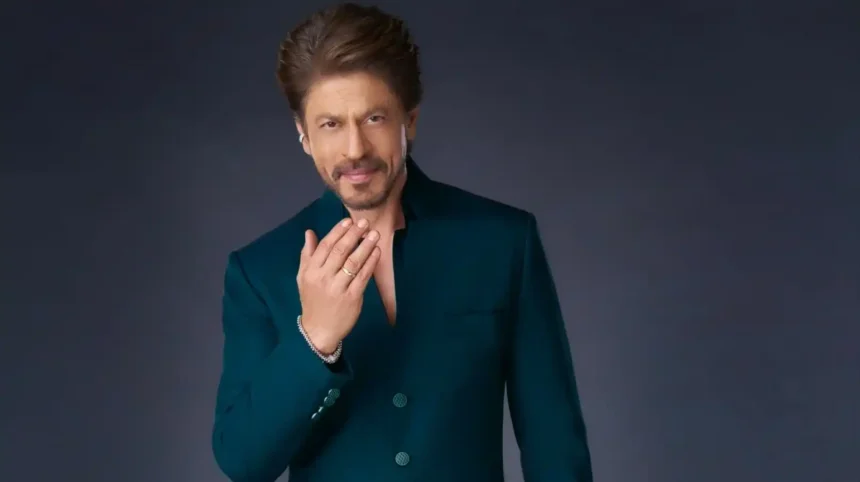
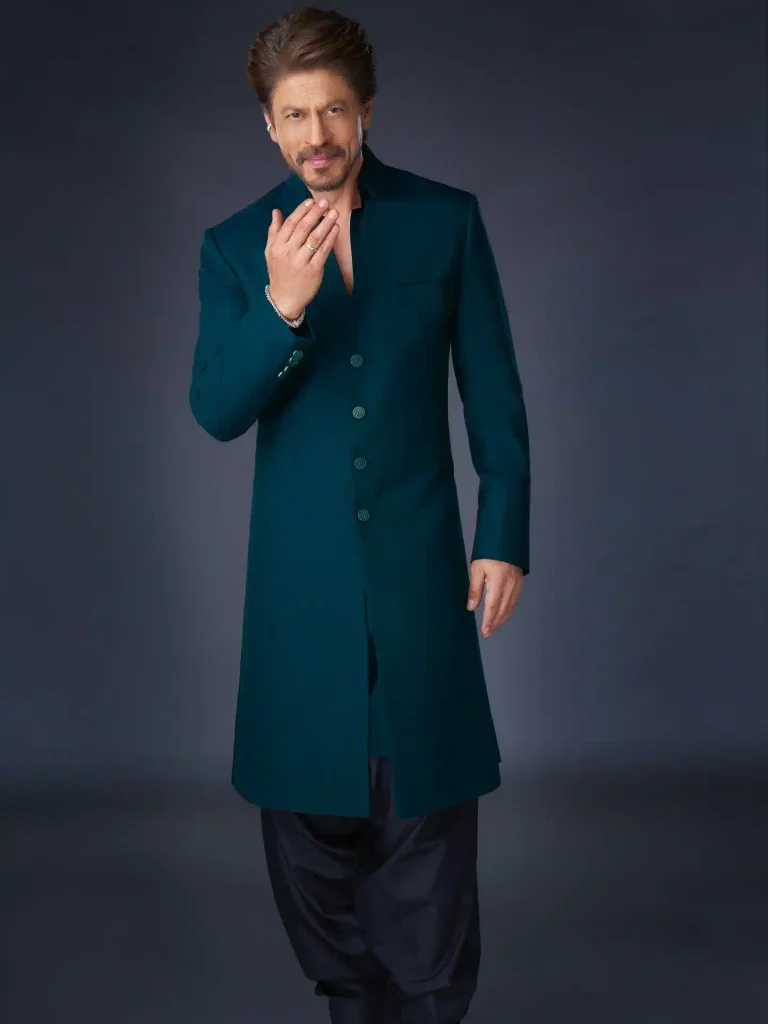
Shah Rukh Khan once again demonstrates why his approach to traditional menswear continues to command attention, stepping away from predictable festive neutrals in favour of a striking emerald-green achkan. The jewel-toned ensemble brings together structured tailoring, fluid proportions and restrained accessories, creating a contemporary Eid look that feels regal without appearing overly ornate.
The actor’s styling makes a strong case for moving beyond conventional black, ivory and beige festive wardrobes. Instead, the deep emerald palette introduces colour while retaining the sophistication expected from formal Indian occasionwear.
What makes the ensemble particularly effective is its balance. The achkan provides a sharply defined upper silhouette, while the darker, draped silk bottoms introduce movement and ease. Rather than relying on elaborate embroidery or excessive accessories, the look allows tailoring, colour and fabric to carry the visual impact.
Shah Rukh Khan’s Emerald Achkan Makes a Strong Style Statement
The deep emerald achkan immediately establishes the mood of the outfit.
Jewel tones have long been associated with evening dressing because they can appear rich and dimensional under artificial lighting. Emerald green, in particular, offers a sophisticated alternative to more frequently seen festive colours while retaining a formal character.
On Khan, the dark green tone gives the traditional silhouette a modern edge. The colour feels celebratory without becoming excessively bright, making it particularly suitable for Eid gatherings, evening celebrations and formal family occasions.
The overall effect is understated luxury rather than decorative excess.
Precision Tailoring Keeps the Look Contemporary
The achkan’s strongest feature is its streamlined construction.
The structured shoulders create definition, while the elongated body gives the traditional garment a commanding vertical line. A clean mandarin collar reinforces the formal character of the outfit and keeps attention around the face.
Tone-on-tone, fabric-covered buttons further contribute to the understated finish. Instead of contrasting embellishments, the details remain within the same visual language as the garment.
That restraint is important.
Traditional Indian occasionwear can easily become visually heavy when embroidery, metallic details and contrasting accessories are layered together. This ensemble takes the opposite approach, allowing the cut and fabric to provide the sophistication.
For anyone looking to recreate the aesthetic, the lesson is straightforward: when the silhouette is strong, additional decoration becomes optional rather than necessary.
The Emerald-and-Black Combination Changes the Proportion
One of the most interesting aspects of the ensemble is the contrast between the structured achkan and the fluid black lower half.
Rather than pairing the long tunic with a conventional fitted churidar, the styling introduces a more relaxed, draped trouser silhouette. The difference in volume creates visual movement beneath the structured upper garment.
This proportion feels particularly current because contemporary Indian menswear increasingly blends traditional silhouettes with relaxed tailoring.
The achkan maintains the formality associated with occasion dressing, while the flowing black bottoms prevent the outfit from appearing rigid.
It is a useful styling technique beyond this particular look: combine one structured garment with one fluid element to create contrast without sacrificing elegance.
Minimal Accessories Let the Clothing Lead
Khan’s accessories remain deliberately restrained.
A subtle silver link bracelet and understated ring provide just enough detail without competing with the emerald achkan. The grooming is equally controlled, reinforcing the clean aesthetic.
This is an important part of the overall styling philosophy.
When a garment already has a strong colour and distinctive silhouette, excessive jewellery can dilute its impact. By keeping accessories minimal, the outfit maintains a polished and confident character.
The clean collarline is especially effective because there are no unnecessary layers around the neck competing with the mandarin collar.
The result is a look where every visible element has a purpose.
Why Emerald Works for Eid Dressing
Eid fashion traditionally provides an opportunity to experiment with colour, texture and tailoring while retaining a connection to South Asian sartorial traditions.
Emerald green offers a particularly versatile option.
Compared with brighter greens, deep emerald has a more muted and sophisticated quality. It can transition comfortably from daytime celebrations to evening events, depending on the fabric and styling.
For formal occasions, materials such as raw silk or structured matka silk can enhance the architectural quality of an achkan. For a softer interpretation, textured blends can provide structure without making the garment feel excessively formal.
The key is choosing a shade that complements the wearer’s complexion while maintaining sufficient depth to preserve the richness of the jewel-tone aesthetic.
Fabric Choice Can Transform the Same Silhouette
The fabric is just as important as the colour.
A structured achkan requires a material capable of maintaining its shape. Raw silk is a natural choice for festive dressing because it provides body while retaining a refined surface texture.
A wool-silk or wool-blend fabric can offer another route, particularly for cooler evening events. High-twist matka silk can also provide a distinctive textured appearance while supporting the structured lines of the garment.
For the lower half, the objective changes.
Fluid satin or mulberry silk can introduce the movement that contrasts with the achkan’s architectural construction. The combination of a structured top and flowing bottom creates a sophisticated visual tension.
This contrast is one of the reasons the ensemble feels contemporary rather than strictly traditional.
Footwear Should Maintain the Dark, Formal Palette
The footwear should complement rather than interrupt the emerald-and-black combination.
Polished black velvet loafers offer a refined Western-Indian fusion, while traditional embroidered juttis can reinforce the ethnic character of the outfit.
For a more formal interpretation, patent leather dress shoes can provide a sharper finish.
The important consideration is consistency. Since the outfit already relies on a dark lower half, footwear in a compatible tone creates a continuous visual line and allows the emerald achkan to remain the focal point.
Fit Is the Most Important Detail
A similar outfit can look dramatically different depending on its tailoring.
The shoulder seam should sit precisely at the natural shoulder rather than extending beyond it. A poorly positioned shoulder can make even an expensive achkan appear oversized or unstructured.
The length should also be considered carefully. Because the achkan is elongated, the centre slit needs to fall cleanly and allow comfortable movement while maintaining the intended vertical silhouette.
The garment should skim the body rather than cling tightly.
That distinction matters. Modern formal Indian menswear is increasingly moving toward clean, comfortable tailoring rather than restrictive fits.
The goal is a silhouette that looks deliberate while allowing the wearer to move naturally.
A Modern Interpretation of Indian Formalwear
Shah Rukh Khan’s emerald ensemble illustrates how traditional Indian clothing can evolve without losing its identity.
The achkan remains recognisably rooted in South Asian formalwear, but the styling introduces contemporary proportions and a more restrained approach to ornamentation.
There is no need to completely reinvent a traditional garment to make it modern. Changing the colour, refining the cut, adjusting proportions and reducing unnecessary detailing can be enough.
That approach also makes the look more adaptable.
A similar formula could work for weddings, Eid celebrations, festive dinners, receptions and other formal occasions where traditional clothing is expected but a contemporary finish is preferred.
How to Recreate the Look
For men looking to build a similar wardrobe, the ensemble can be broken into a few practical elements:
Start with the colour. Choose a deep emerald or dark teal achkan instead of the more predictable neutral shades.
Prioritise tailoring. Look for a clean shoulder line, structured body and precise mandarin collar.
Keep the surface relatively clean. Minimal embroidery allows the colour and construction to remain the focal points.
Introduce volume below. A fluid silk salwar, dhoti-style trouser or relaxed formal trouser can create contrast against the structured upper garment.
Choose understated accessories. One bracelet or ring can be enough.
Finish with appropriate footwear. Black loafers, traditional juttis or polished formal shoes can all work depending on the occasion.
The objective is not to duplicate every individual detail but to understand the styling principle behind the outfit: structured tailoring plus fluid volume, anchored by a rich jewel tone.
Shah Rukh Khan’s Approach to Festive Style
What makes the ensemble noteworthy is not simply the choice of emerald green. It is the confidence with which the colour is allowed to dominate.
The styling demonstrates that festive dressing does not require heavy embellishment to appear luxurious. A well-cut garment in a sophisticated colour can create the same sense of occasion with considerably less visual noise.
For contemporary Indian menswear, that is an increasingly relevant idea.
As designers and consumers experiment with traditional silhouettes, the emphasis is shifting toward fabric quality, fit, proportion and individual styling. Khan’s look fits comfortably within that broader movement.
The emerald achkan therefore works on two levels: it is an eye-catching celebrity fashion moment, but it is also a practical example of how classic Indian formalwear can be adapted for a modern wardrobe.
The Takeaway
Shah Rukh Khan’s emerald-green Eid ensemble makes a persuasive case for sophisticated colour, precise tailoring and restrained styling.
The deep jewel tone provides the drama. The structured achkan supplies the formality. The flowing black bottoms introduce movement, while the minimal accessories prevent the outfit from becoming overly elaborate.
Together, these elements create a look that feels festive, contemporary and distinctly Indian.
ALSO READ:
- Can Lifestyle Changes Cure Cancer? Chhavi Mittal’s Experience Brings Attention to an Important Medical Question
- 15 Best Haircuts for Straight Hair That Create More Volume, Inspired by Celebrity Trends
- Anupama Parameswaran Responds to Speculation Over Her Instagram Posts: “I Decide What to Share”
- From Classroom to Cambridge: How Consistent Learning Helped Priyanka Reddy Karumuru Secure an AWS Role
- Bengaluru Woman Alleges Uncomfortable Uber Parcel Pickup Experience, Viral Post Sparks Safety Debate
- Ghaziabad Psychiatrist Found Dead; Police Probe Circumstances Surrounding Incident
- Who Is Aditi Sharma? Everything to Know About the Television Actress
- Manu Bhaker’s Message on Respectful Language Goes Viral Amid Public Discourse Debate
- Assam Woman Says First Solo Flight at 34 Changed Her Life: “I Finally Trusted Myself Again”
- TV Actress Aditi Sharma Files Domestic Violence Complaint Against Husband and In-Laws; Mumbai Police Register FIR
- Huma Qureshi Defends Kiara Advani and Yash Amid ‘Tabaahi’ Backlash, Calls Online Trolling “Disgusting”
- Sandra Bullock Enjoys Birthday Week Outing With Son Louis as She Continues to Put Family First